Six Years of Discovery: Reflections on My PhD Journey
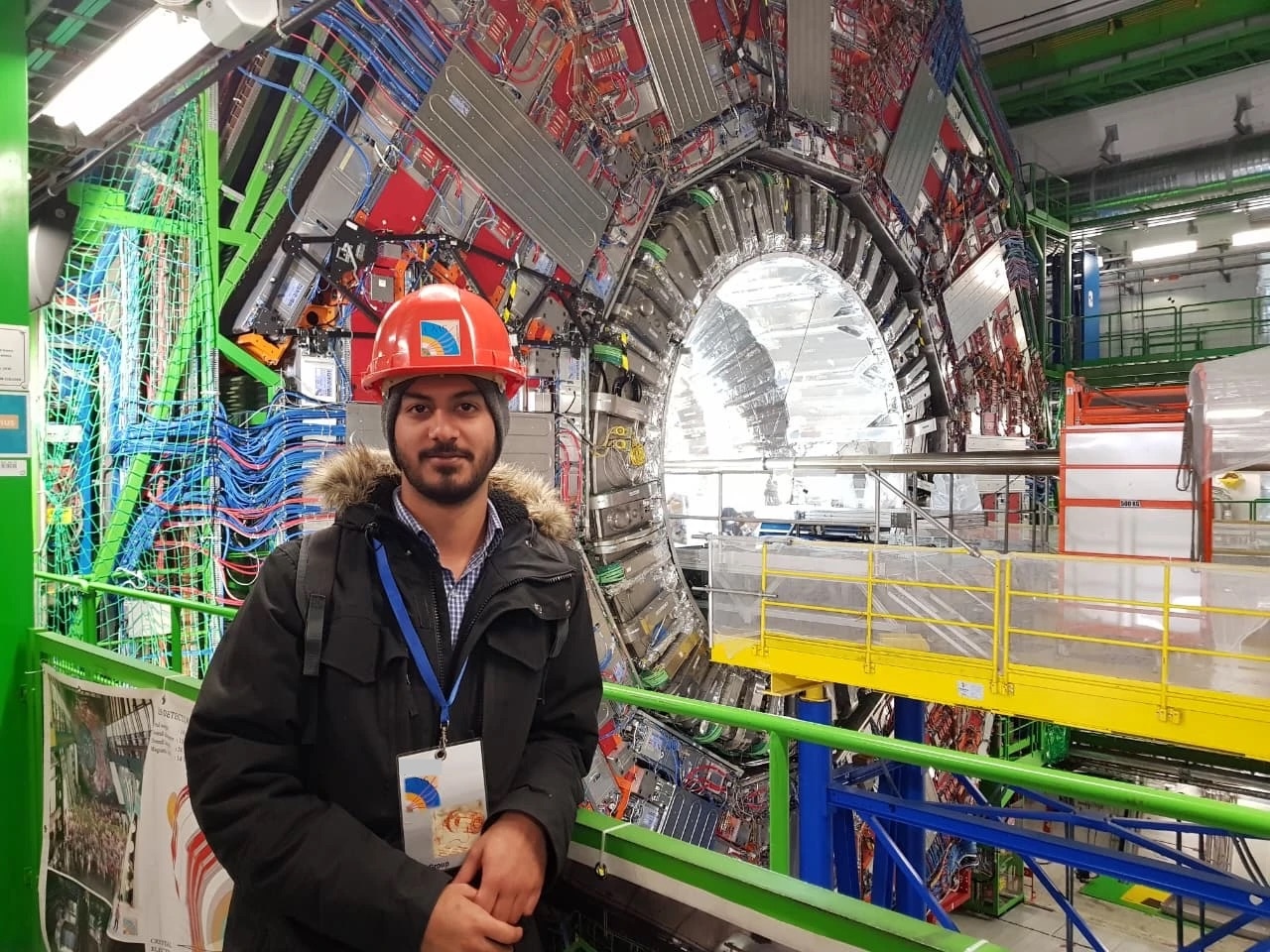
Today, November 19, 2025, I successfully defended my doctoral dissertation at the University of Antwerp. As I sit here processing this milestone, I'm reflecting on the six-year journey from PhD candidate to Dr. Koushik.
The Beginning (2019)
I started my PhD in 2019 with enthusiasm, naivety, and countless questions. Coming from my Master's work at RWTH Aachen, I thought I understood research. I was wrong.
A PhD is fundamentally different from coursework or even a Master's thesis. It's about:
- Creating new knowledge: Not just learning what's known
- Perseverance through failure: Most experiments don't work the first time (or the tenth)
- Independence: Learning to guide your own research
The First Year Challenge
The first year was humbling. My initial research direction didn't pan out. Experiments failed. Code refused to work. I questioned whether I was cut out for this.
But failure teaches more than success. I learned:
- Resilience: Getting up after setbacks
- Adaptability: Changing approaches when needed
- Resourcefulness: Finding solutions with limited resources
Finding My Path (2020-2021)
The breakthrough came when I began working on precision alignment systems. This combined my skills in software development (from JUNO), optics, and mechanical engineering in ways I hadn't anticipated.
The Rasnik Project
Developing the Rasnik 3-point alignment system became my flagship project. Achieving 5 pm/√Hz resolution required:
- Months of calibration: Every systematic effect carefully characterized
- Collaboration: Working with experts across multiple institutions
- Persistence: When others said it couldn't be done
The moment we achieved our target resolution was euphoric. Years of work validated in a single measurement.
Joining LIGO (2023)
Becoming a member of the LIGO Scientific Collaboration in 2023 was transformative. Suddenly, I was part of a global effort to observe gravitational waves.
The O4 Observing Run
Contributing to LIGO's fourth observing run meant:
- Real astrophysics: Analyzing data from actual black hole mergers
- Collaboration at scale: Working with 1,500+ scientists
- Continuous learning: Every week brought new challenges
The first time I processed data from a gravitational wave candidate, seeing those characteristic chirp signals, was profound. We're witnessing cosmic events billions of years old, ripples in spacetime itself reaching Earth.
Challenges Along the Way
Imposter Syndrome
Even after publishing papers and achieving results, doubts persisted. Am I good enough? Do I belong here?
The reality: Everyone feels this way sometimes. The scientists I most admire have shared their own struggles with imposter syndrome.
Work-Life Balance
Research is consuming. There's always another analysis to run, another paper to read, another experiment to improve.
Learning to disconnect was crucial for mental health. Evening walks, occasional travel, maintaining friendships outside physics—these weren't luxuries but necessities.
COVID-19 Pandemic
The pandemic disrupted research worldwide. Labs closed. Collaborations moved online. Experiments delayed.
But we adapted. Virtual meetings became the norm. Remote detector operation was refined. In some ways, the pandemic accelerated adoption of collaborative tools.
The ETpathfinder Collaboration
Working on cryogenic technologies for the Einstein Telescope through the ETpathfinder collaboration was intellectually stimulating. The scale and ambition of third-generation detectors is staggering.
This work taught me about:
- Thinking long-term: ET won't operate for decades, but we're building its foundation now
- Interdisciplinary science: Combining cryogenics, optics, materials science, and quantum physics
- International collaboration: Working across European institutions
Publications and Recognition
Seeing my name on publications—especially as first author on the Rasnik system paper—was validating. Research only matters if communicated effectively.
Writing skills developed through:
- Countless drafts: Every paper went through dozens of revisions
- Peer review: Learning to accept and incorporate criticism
- Presenting: Conferences taught me to explain complex ideas simply
The EPJ Web of Conferences LCWS 2024 publication on C³ accelerator alignment brought another dimension: presenting work to a broader particle physics community.
Lessons Learned
If I could advise my 2019 self, I'd say:
1. Failure is Part of the Process
Most experiments fail. Most code has bugs. Most analyses need redoing. This is normal. What matters is learning from failures.
2. Collaboration is Strength
The lone genius is a myth. Great science comes from teams. Learning to collaborate effectively—across institutions, time zones, and cultures—is essential.
3. Communication Matters
The best research means nothing if you can't explain it. Practice presenting. Write clearly. Make figures that tell stories.
4. Take Care of Yourself
Research is marathon, not a sprint. Burnout helps no one. Exercise, sleep, social connections—these enable sustainable productivity.
5. Enjoy the Journey
There were moments of pure joy: successful experiments, beautiful data, insights clicking into place. Savor these moments.
Looking Forward
As I transition from PhD candidate to postdoctoral researcher, new opportunities await:
- Deeper involvement in LIGO: More responsibility in the collaboration
- Advanced alignment systems: Building on Rasnik for next-generation detectors
- Mentoring: Helping guide the next generation of researchers
The PhD taught me not just physics and engineering, but resilience, collaboration, and the joy of discovery.
Acknowledgments
This journey was only possible through support from:
- My advisors: Providing guidance while allowing independence
- Collaborators: At University of Antwerp, LIGO, ETpathfinder, and beyond
- Family and friends: Supporting through challenges and celebrating successes
- The physics community: Welcoming me into this incredible endeavor
Final Thoughts
Six years ago, I set out to contribute something meaningful to physics. Today, I can say I've done that. The Rasnik system enables experiments I'll never directly participate in. LIGO analyses I contributed to expand our understanding of the universe.
That's the beauty of fundamental research: the impact extends far beyond your individual contribution.
To those considering a PhD: It's challenging. It's frustrating. It's uncertain.
It's also deeply rewarding.
Welcome to the journey.
Defended November 19, 2025, University of Antwerp