My Master's Journey at RWTH Aachen University
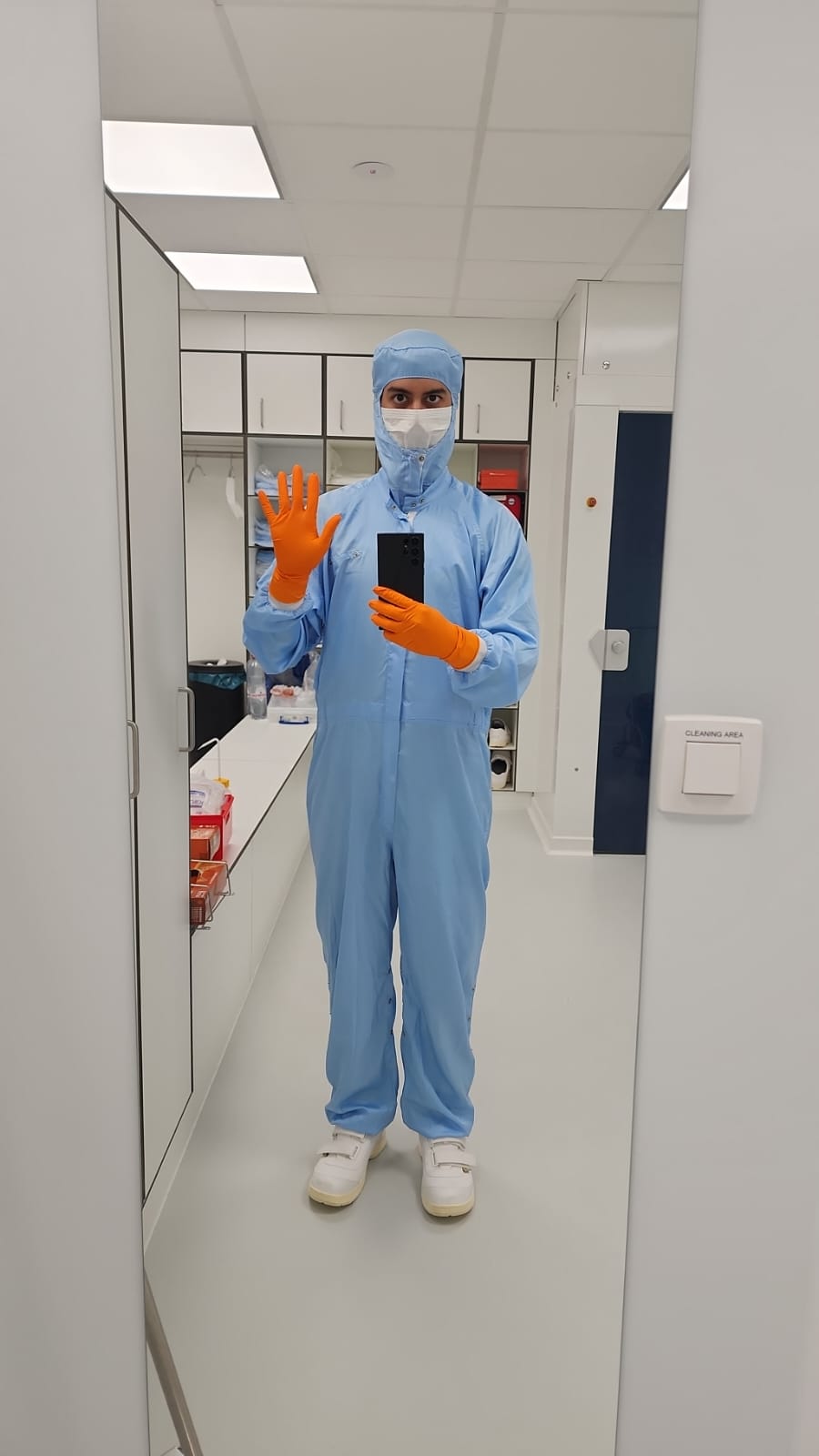
December 2020 marked the completion of my Master's degree in Physics at RWTH Aachen University. Three years of intensive study, research, and personal growth that fundamentally shaped my approach to experimental physics.
Why RWTH Aachen?
RWTH Aachen University is renowned for its engineering and physics programs. Located in Germany's border region near Belgium and the Netherlands, it offered:
- World-class facilities: Direct access to Forschungszentrum Jülich, one of Europe's premier research centers
- International environment: Students from over 100 countries
- Strong experimental focus: Emphasis on practical skills alongside theory
- Proximity to CERN: Opportunities for high-energy physics collaboration
Coming from Christ University in Bangalore with a Bachelor's in Physics, Chemistry, and Mathematics, I was eager to deepen my understanding of experimental particle physics.
The Transition
Moving from India to Germany in 2017 was transformative. Everything was different:
Academic Culture
- Independent study: Less structured than Indian undergraduate programs
- Research from day one: Master's students expected to contribute to active projects
- Seminar culture: Learning through presentations and discussions, not just lectures
Language Barrier
While courses were in English, daily life was in German. I started with elementary German (later earning Duolingo certification) and gradually became comfortable navigating both academic and everyday situations.
Research Expectations
The pace was intense. Master's students weren't just learning physics—we were doing physics. Contributing to real experiments. Writing code that would actually be used. Making measurements that would be published.
First Year: Foundations
The first year focused on advanced coursework:
Quantum Field Theory
Moving beyond undergraduate quantum mechanics to the framework underlying particle physics. The mathematics was challenging, but understanding how particles interact through field exchanges was revelatory.
Statistical Methods
Experimental physics lives or dies on statistics. We learned:
- Maximum likelihood estimation
- Hypothesis testing
- Monte Carlo methods
- Systematic uncertainty analysis
These skills would prove invaluable in all my subsequent research.
Advanced Lab Courses
Hands-on experiments developing practical skills:
- Vacuum technology
- Cryogenic systems
- Radiation detection
- Data acquisition
Research Assistant at RWTH (2018-2019)
In October 2018, I began working as a research assistant on the JUNO project—the Jiangmen Underground Neutrino Observatory.
The JUNO Challenge
JUNO aims to determine the neutrino mass hierarchy, a fundamental question in particle physics. The detector uses 20,000 tons of liquid scintillator viewed by approximately 20,000 photomultiplier tubes.
My role focused on the Data Acquisition (DAQ) system.
Building a DAQ System
The challenge was immense:
- Data rate: Gigabytes per second from thousands of channels
- Timing precision: Nanosecond-level synchronization
- Reliability: Must operate continuously for years
- Flexibility: Adapt to changing detector conditions
I worked on:
Software Architecture Designed modular systems allowing independent testing and replacement of components. Used C++ for performance-critical paths and Python for flexibility.
Real-Time Processing Implemented algorithms to identify interesting events amid background noise, making decisions in microseconds while maintaining high efficiency.
Distributed Computing Coordinated processing across multiple nodes, managing data flow and preventing bottlenecks.
Lessons from JUNO
The JUNO project taught me that modern experimental physics is as much about software engineering and systems design as it is about fundamental theory.
Skills gained:
- Version control and collaborative coding
- Performance optimization
- System debugging and troubleshooting
- Working in large, international teams
Forschungszentrum Jülich (2019-2020)
In October 2019, I began a parallel appointment as a graduate student researcher at Forschungszentrum Jülich.
The Jülich Environment
Forschungszentrum Jülich is massive—a research campus with thousands of scientists working on everything from brain imaging to quantum computing to energy research.
The physics institute where I worked focused on detector development for particle physics experiments.
SiPM Array Research
Silicon Photomultipliers (SiPMs) are revolutionary light sensors—solid-state devices with single-photon sensitivity. I worked on systematic uncertainty analysis for the JEDI (Jülich Electric Dipole moment Investigations) collaboration.
The Challenge SiPM arrays have correlated uncertainties. Temperature affects all pixels. Bias voltage fluctuations impact entire modules. Understanding these systematic effects required:
- Extensive testing: Characterizing hundreds of sensors under varying conditions
- Statistical modeling: Separating correlated and uncorrelated uncertainties
- Calibration procedures: Ensuring stable long-term performance
Publication This work resulted in a publication in the Journal of Instrumentation (2021), my first experience with the full publication process in experimental physics.
Master's Thesis
My thesis brought together everything I'd learned:
Topic: Advanced data acquisition techniques for large-scale neutrino detectors
Approach:
- Theoretical framework for real-time event selection
- Practical implementation and testing
- Performance evaluation with simulated and real data
Outcome: Successfully defended in December 2020, with contributions that would be incorporated into the actual JUNO DAQ system.
Personal Growth
Beyond academics, the Master's program shaped me personally:
International Perspective
Collaborating with colleagues from China, Germany, Italy, Russia, and dozens of other countries taught me that great science transcends borders. We communicated in the universal language of physics.
Resilience
Research doesn't always work. Experiments fail. Code has bugs. Analyses reveal unexpected problems.
Learning to persevere through setbacks, to debug systematically, to ask for help when needed—these lessons extended far beyond physics.
Collaboration
The lone genius is a myth. Every significant achievement involved teams. Learning to work effectively in groups, to communicate clearly, to integrate diverse perspectives—these skills are as important as technical knowledge.
The German Research Culture
Germany's research culture emphasizes:
- Thoroughness: Don't just make it work; understand why it works
- Documentation: Future researchers should understand your work
- Reproducibility: Methods clearly described, code properly archived
- Critical thinking: Question assumptions, even your own
These values became deeply ingrained in my approach to research.
Looking Forward to the PhD
Completing my Master's in December 2020, I was well-prepared for doctoral research. The skills developed at RWTH—software development, statistical analysis, detector instrumentation—would prove essential for my PhD work on gravitational wave detectors at the University of Antwerp.
Advice for Prospective Master's Students
For those considering a Master's in experimental physics:
Before Starting
- Programming is essential: Learn Python and C++ before arrival
- Math matters: Linear algebra and statistics are used daily
- English proficiency: Scientific communication requires clear writing and speaking
During the Program
- Start research early: Don't wait for the thesis; join a group immediately
- Attend seminars: Even if the topic seems unrelated, exposure to diverse physics is valuable
- Network: Build relationships with professors, postdocs, and fellow students
- Document everything: Good lab notebooks and code comments save time later
Choosing Research Topics
- Follow your interest: You'll spend years on this; make sure you care
- Consider the group: Your advisor and colleagues matter as much as the topic
- Think long-term: How does this prepare you for your next career step?
Reflections
The three years at RWTH Aachen transformed me from a physics student into a physics researcher. I learned not just what we know about the universe, but how we know it—through careful experiments, rigorous analysis, and collaborative effort.
The friendships formed, the challenges overcome, the knowledge gained—these define my Master's experience at RWTH Aachen University.
To current and future students: embrace the challenge. The journey is demanding, but the rewards—intellectual, professional, and personal—are profound.
Master of Science in Physics, RWTH Aachen University, 2017-2020