My Journey with LIGO's Fourth Observing Run
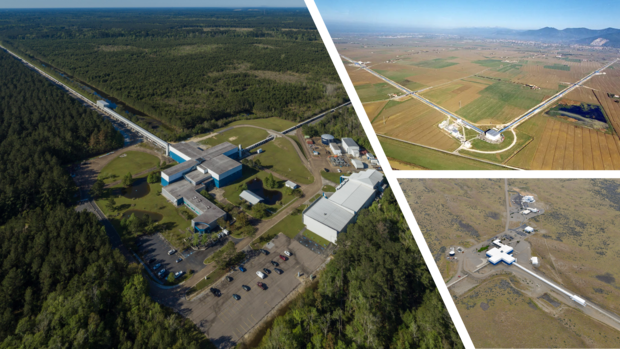
The fourth observing run (O4) of the LIGO-Virgo-KAGRA gravitational wave detector network has been an extraordinary chapter in my research career. As a member of the LIGO Scientific Collaboration (Member ID: 6469), I've had the privilege of contributing to one of the most ambitious scientific endeavors of our time.
The GWTC-4.0 Catalog
Our team recently completed analysis of the second half of O4, resulting in the GWTC-4.0 catalog containing 218 gravitational wave candidates. Each candidate represents a potential cosmic event—black hole mergers, neutron star collisions, or other extreme astrophysical phenomena that ripple through spacetime itself.
The sheer scale of this work is humbling. We're now detecting gravitational waves not as rare anomalies, but as regular occurrences, fundamentally changing how we observe the universe.
Continuous Wave Searches
One of my primary contributions has been the search for continuous gravitational waves from 21 known pulsars. Unlike the transient signals from mergers, continuous waves are persistent signals from rapidly rotating neutron stars with asymmetries.
This work requires extraordinary patience and computational resources. We're looking for signals that are incredibly weak—imagine trying to hear a whisper in a hurricane while standing on the other side of the planet.
Targeted Supernova Searches
Perhaps the most exciting aspect has been our targeted searches for gravitational waves from recent supernovae, specifically SN 2023ixf and SN 2023zaw. These core-collapse events represent the violent deaths of massive stars, and detecting gravitational waves from them would provide unprecedented insights into the physics of stellar collapse.
While we haven't yet made a definitive detection from these events, the upper limits we've established are scientifically valuable, constraining models of supernova physics and neutrino emission.
Multi-Messenger Astronomy
The integration of gravitational wave observations with electromagnetic astronomy—multi-messenger astronomy—has opened entirely new ways of understanding cosmic events. We're no longer just "seeing" the universe with light; we're also "feeling" it through gravitational waves.
Looking Forward
As O4 continues and we prepare for future detector upgrades, the sensitivity and reach of our instruments will only improve. The Einstein Telescope and Cosmic Explorer promise to revolutionize the field once again, detecting events from the early universe and providing tests of general relativity in extreme conditions.
This is an incredible time to be a gravitational wave physicist.
This post reflects on work published in arXiv:2508.18082, arXiv:2501.01495, and arXiv:2410.16565