Joining the LIGO Scientific Collaboration: A Dream Realized
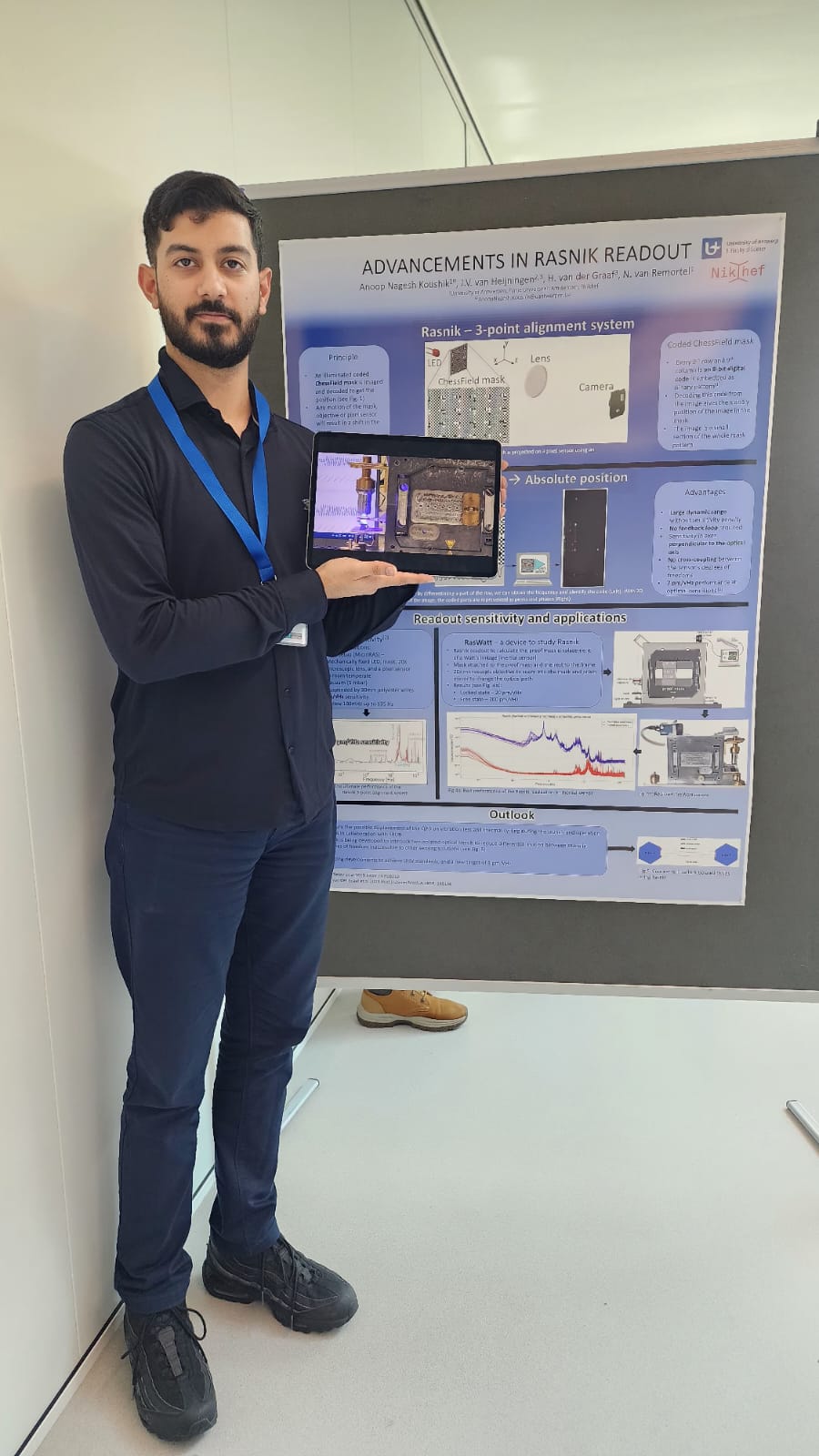
August 2023 will forever be etched in my memory as the month I officially became a member of the LIGO Scientific Collaboration. Member ID: 6469. A number that represents not just my position in a database, but entry into one of the most ambitious scientific endeavors in human history.
The Journey to LIGO
My path to LIGO wasn't direct. It wound through:
- Undergraduate physics at Christ University, Bangalore
- Master's research at RWTH Aachen University
- Data acquisition systems for the JUNO neutrino detector
- Cryogenic technologies for ETpathfinder
- Precision alignment systems
Each step built skills that would prove essential for gravitational wave research.
What LIGO Membership Means
Being part of LIGO isn't just about having access to data. It's about joining a community of 1,500+ scientists, engineers, and students united by a single goal: understanding the universe through gravitational waves.
The Scale is Humbling
LIGO operates three detectors:
- LIGO Hanford (Washington State, USA)
- LIGO Livingston (Louisiana, USA)
- Virgo (Italy, in partnership)
- KAGRA (Japan, in partnership)
Together, these instruments can detect changes in distance smaller than 1/10,000th the diameter of a proton. The engineering required to achieve this sensitivity is staggering.
The O4 Observing Run
I joined during the fourth observing run (O4), which began in May 2023. Unlike previous runs, O4 would benefit from upgraded detectors with improved sensitivity.
My initial contributions focused on:
Continuous Wave Searches
Searching for persistent gravitational wave signals from rapidly rotating neutron stars. These searches require:
- Long integration times: Months of data analyzed together
- Sophisticated algorithms: Accounting for Doppler shifts as Earth orbits the Sun
- Massive computational resources: Distributed across computing centers worldwide
Transient Event Analysis
When binary systems merge—two black holes, two neutron stars, or mixed pairs—they produce characteristic gravitational wave signals called "chirps." Analyzing these events involves:
- Rapid response: Alerts generated within minutes
- Multi-messenger coordination: Working with electromagnetic observatories
- Astrophysical interpretation: What can we learn about the progenitor systems?
The First Detection I Analyzed
I'll never forget the first gravitational wave candidate I personally analyzed. The data showed the unmistakable pattern: increasing frequency and amplitude as two black holes spiraled toward each other, culminating in merger and ringdown.
This event happened 1.3 billion years ago. The black holes were 29 and 35 solar masses. When they merged, they converted three solar masses into gravitational wave energy in a fraction of a second—more power than all the stars in the observable universe combined, for that brief moment.
And we detected it. We measured it. We understood it.
Collaboration Dynamics
LIGO operates through working groups:
- Detector Characterization: Understanding instrumental noise
- Calibration: Ensuring accurate measurements
- Compact Binary Coalescence: Analyzing merger events
- Continuous Waves: My primary focus
- Burst Searches: Transient signals from supernovae and other sources
- Stochastic Background: Seeking the cosmic gravitational wave background
Each working group meets weekly via video conference, spans time zones from Hawaii to Japan, and maintains its own data analysis pipelines and publications.
The Publication Process
LIGO publications involve hundreds to thousands of authors. The review process is rigorous:
- Internal review: Working group scrutiny
- Collaboration-wide review: All members can comment
- Response to comments: Addressing every concern
- Author approval: Every co-author must explicitly approve
- Journal submission: Only after collaboration consensus
This process can take months, but it ensures the highest scientific standards.
Multi-Messenger Astronomy
One of the most exciting aspects of LIGO is multi-messenger astronomy. When we detect a gravitational wave from merging neutron stars, we immediately alert electromagnetic observatories worldwide.
In 2017, GW170817 demonstrated this beautifully:
- Gravitational waves detected by LIGO-Virgo
- Gamma-ray burst observed by Fermi satellite
- Optical counterpart found by dozens of telescopes
- Radio emission tracked for months
This single event revolutionized our understanding of neutron star mergers, gamma-ray bursts, and the origin of heavy elements in the universe.
Personal Growth
Joining LIGO has accelerated my scientific development:
Technical Skills
- Advanced data analysis techniques
- Bayesian inference methods
- High-performance computing
- Time-series analysis
Collaboration Skills
- Working in large, distributed teams
- Scientific writing and peer review
- Presentation to diverse audiences
- Building consensus across institutions
Broader Perspective
- Understanding the full detector pipeline, from seismic isolation to data analysis
- Appreciating the interconnections between different physics subfields
- Seeing how fundamental research connects to technology development
Looking Forward
The Einstein Telescope and Cosmic Explorer represent the next generation of gravitational wave detectors. With sensitivity 10 times better than current instruments, they will detect mergers throughout cosmic history.
My work on precision alignment systems and cryogenic technologies directly supports these future observatories. It's humbling to contribute to experiments that might not operate for decades but will transform our understanding of the universe.
Why This Matters
Gravitational wave astronomy is barely a decade old. We're in the exploratory phase of a completely new way of observing the cosmos.
In the next decades, we'll:
- Map the black hole population throughout cosmic history
- Test general relativity in extreme conditions
- Measure the expansion rate of the universe independently
- Search for exotic physics beyond the Standard Model
Being part of this journey, even in a small way, is the privilege of a lifetime.
Advice for Aspiring Members
For students and researchers hoping to join LIGO or similar collaborations:
- Build diverse skills: The best contributions often come from interdisciplinary backgrounds
- Start early: Attend conferences, read papers, reach out to collaboration members
- Be patient: The path to membership takes time and demonstrated contributions
- Stay curious: The most interesting problems are often at the boundaries of your expertise
Final Thoughts
Member #6469. It's just a number in a database. But to me, it represents entry into a community dedicated to one of humanity's grandest scientific quests: listening to the universe itself.
The cosmos is speaking to us through spacetime ripples. And we're learning its language.
This post reflects on joining the LIGO Scientific Collaboration in August 2023