Cryogenic Detectors: The Future of Gravitational Wave Astronomy
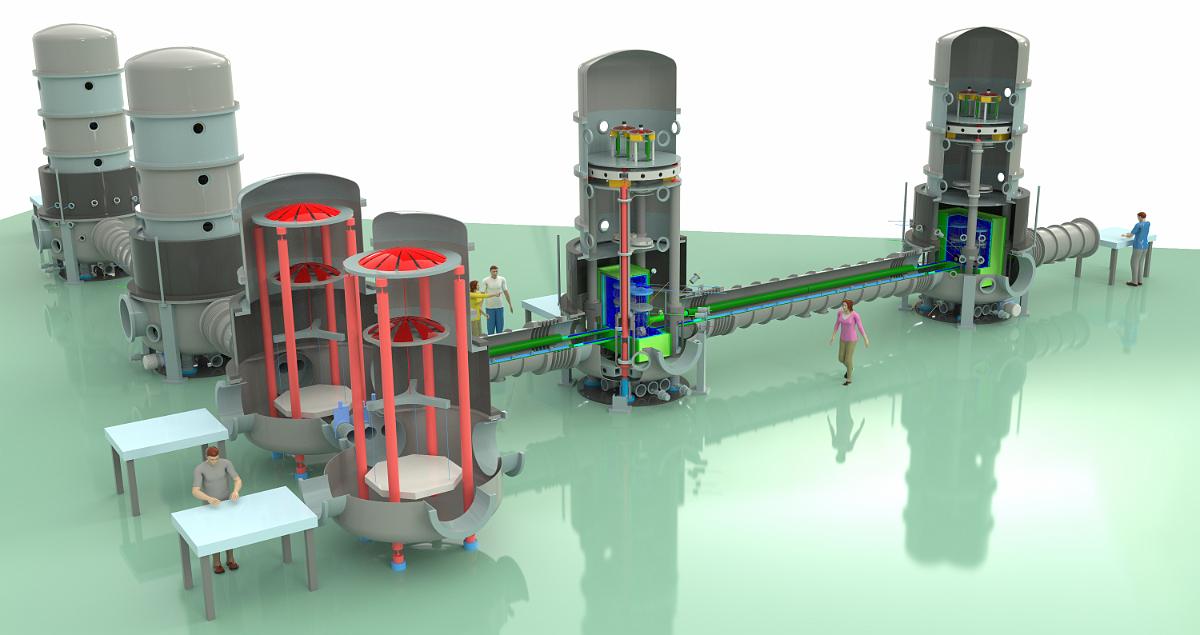
The Einstein Telescope (ET) represents the next giant leap in gravitational wave astronomy. To achieve its ambitious sensitivity goals, we need to push detector technology to new extremes—including operating key components at cryogenic temperatures.
Why Cryogenics?
At room temperature, thermal noise in mirror coatings limits detector sensitivity. The solution? Cool the mirrors to temperatures approaching absolute zero.
Quantum Noise Reduction
At cryogenic temperatures (around 10-20 Kelvin), several noise sources dramatically decrease:
- Thermal noise: Reduced by orders of magnitude
- Coating Brownian noise: The limiting noise source in current detectors
- Substrate thermal noise: Minimized through crystalline materials
But cooling creates new challenges. Every material, every mount, every optical surface must function flawlessly at these extreme temperatures.
ETpathfinder: The Technology Demonstrator
The ETpathfinder project, which I contributed to as part of a 115-author collaboration, serves as a cryogenic testbed. We're not building a full gravitational wave detector—we're proving that the technologies for ET will work.
Key Technologies
Silicon Test Masses: At low temperatures, silicon becomes an ideal substrate. Its thermal expansion coefficient essentially vanishes, making it mechanically stable.
Advanced Coatings: We're testing new coating materials optimized for cryogenic operation, reducing absorption and maintaining excellent optical properties.
Cryogenic Systems: Maintaining vacuum and cryogenic temperatures while allowing laser light to enter and exit is a major engineering challenge.
Lessons from ETpathfinder
Our work has yielded crucial insights:
Thermal Control
Every watt of heat input must be carefully managed. Laser absorption, electronics, and even blackbody radiation from room-temperature surroundings can disrupt the cryogenic environment.
We developed sophisticated thermal modeling to predict and mitigate these effects.
Optical Performance
Silicon mirrors behave differently at 20 K than at 300 K. Coatings that work beautifully at room temperature might fail catastrophically when cooled. Extensive testing revealed which materials and designs truly work.
Seismic Isolation
Cooling systems can introduce vibrations. We designed isolation systems that maintain cryogenic performance while providing the seismic isolation needed for gravitational wave detection.
The Path to Einstein Telescope
ETpathfinder is proving that cryogenic technologies are viable for ET. The next steps involve:
- Scaling up: From small testbeds to kilometer-scale detectors
- Integration: Combining cryogenics with other advanced technologies
- Reliability: Ensuring years of continuous operation
Why This Matters
The Einstein Telescope will detect gravitational waves from the edge of the observable universe. It will observe the merger of the first black holes formed after the Big Bang. It will test general relativity in regimes never before accessible.
None of this is possible without cryogenic detectors.
Personal Reflections
Working on ETpathfinder connected me with world-class scientists across Europe. The complexity and ambition of the project are humbling—we're laying groundwork for discoveries that might not come for decades.
But that's fundamental physics. We build today for the knowledge of tomorrow.
Based on work published in Classical and Quantum Gravity (arXiv:2206.04905)